Image

Our First Fight

“April is the cruellest month,” wrote T.S. Eliot, whose words have been echoing in my head of late, with the recent passage of Indiana’s “Religious Freedom Restoration Act” and the ensuing debate about whether wedding professionals should have the right to claim a religious exemption when it comes to baking cakes or selling dresses to same-sex couples. The brouhaha engendered by RFRA alongside end-of-semester stresses have put me in mind of mine and Steve’s first fight.

♥ ♥ ♥

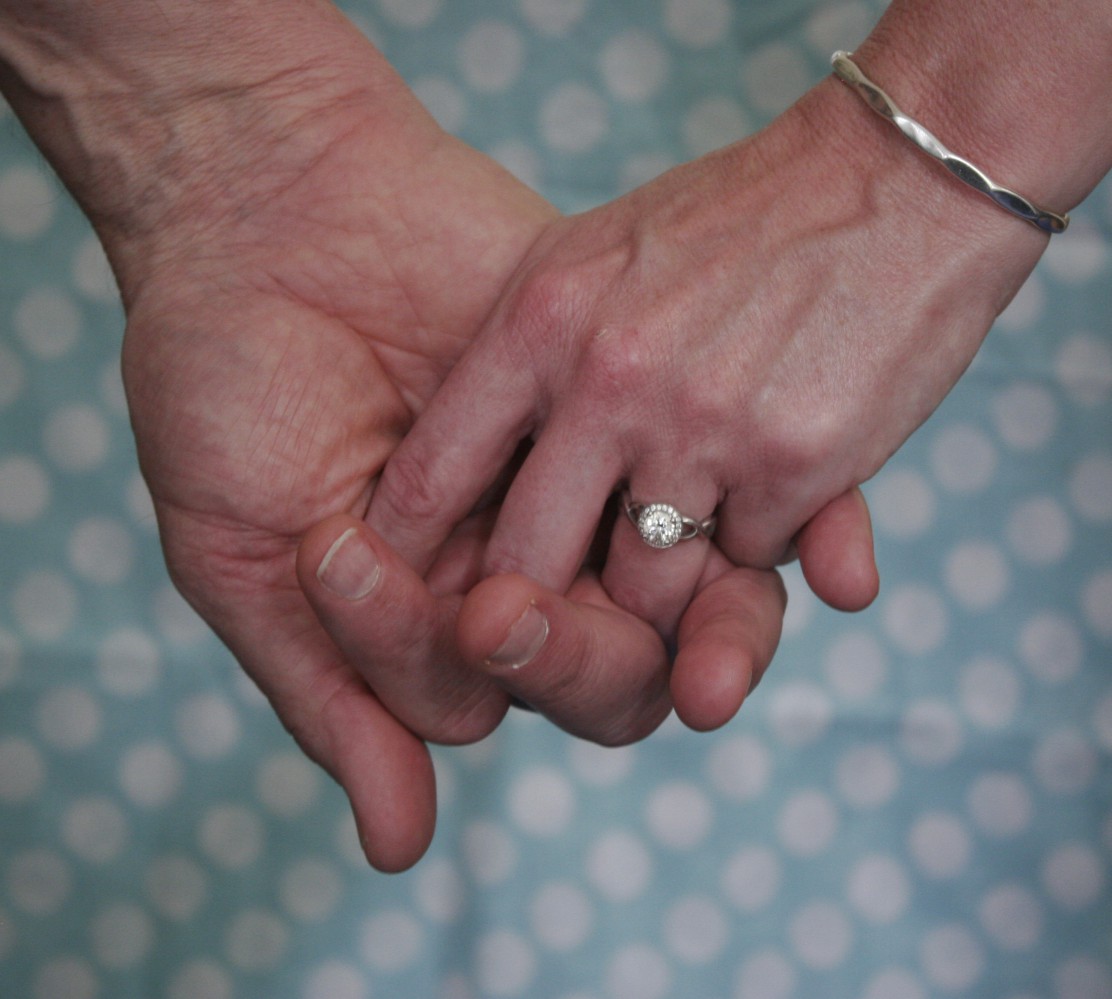
We don’t fight much, and “fight” is relative—our fights are probably more accurately described as “intense disagreements” or maybe, once or twice, “arguments.” We rarely argue about elements of our relationship, but sometimes we disagree about ideas or politics or some happening in the world. The first time it happened was back in July 2014, when the Supreme Court issued the Hobby Lobby decision.

I still remember sitting on my sofa, talking to Steve on the phone, expressing my frustration with the decision. I’d posted a question on Facebook: “Hobby Lobby purports to believe it is wrong for the government to ‘impose’ their ‘moral standards’ on the company at cost to the company. How then do they justify imposing their moral standards on their employees, at additional cost to the employees? (Who, by the way, are likely LESS financially able to bear the burden.) So it’s okay to impose a set of beliefs and morés on others, so long as they’re YOUR beliefs and morés?”

I was dismayed when Steve, though he didn’t exactly side with the Supreme Court’s decision, expressed empathy with their reasoning. He was (not unjustifiably, in a general sense) concerned about the over-reach of government. While he favored some regulation, he felt, on principle, there was inherent danger in the government dictating the policies of a privately held company, especially if they had moral objections to the mandate. If an employee didn’t like the specifics of a company’s insurance plan, he argued, she or he didn’t have to keep working there. Continue reading
Image

Six Lessons My Brother Taught Me

For Todd, on National Siblings Day

1. Sometimes you have to leave home to find home.

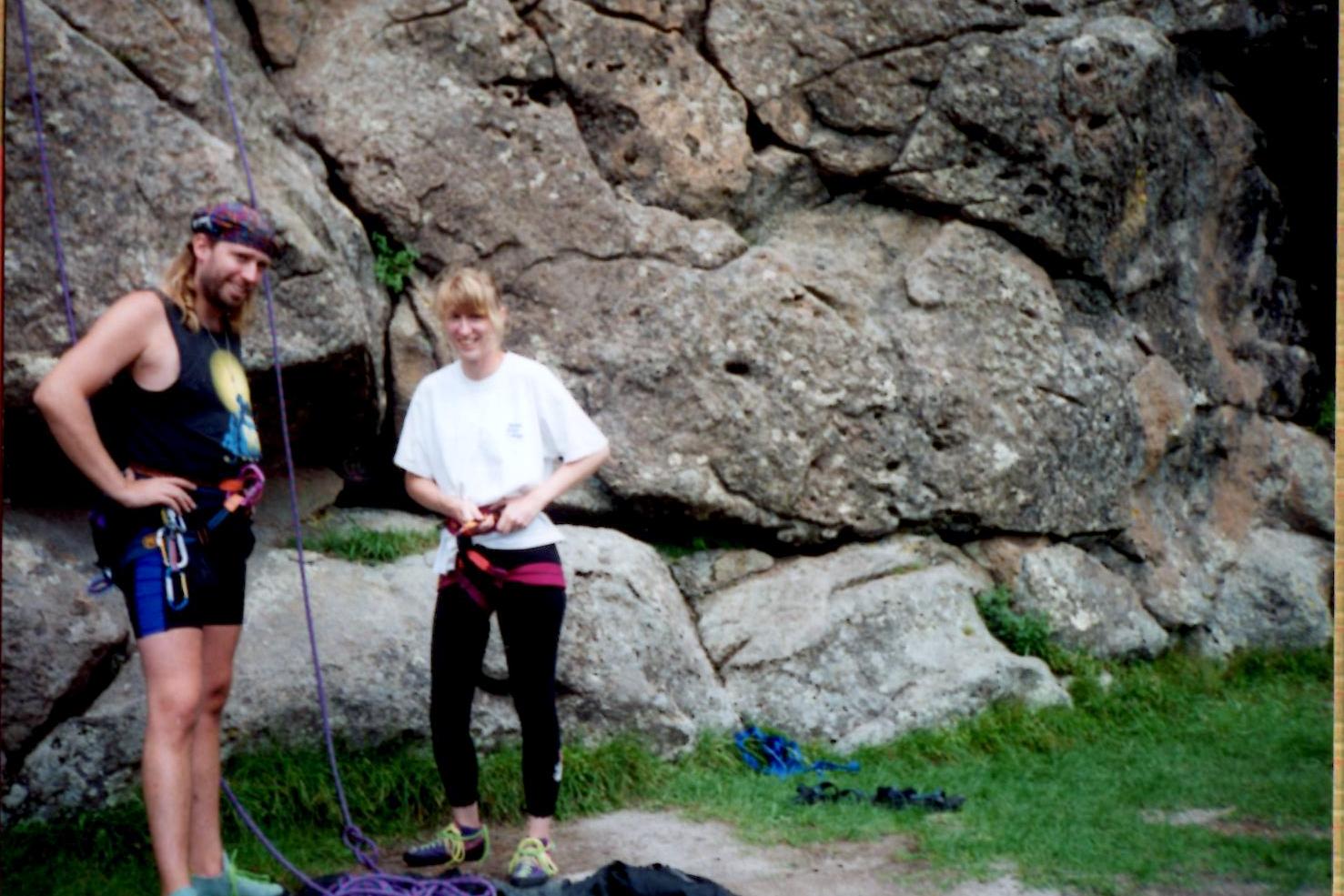
After my brother Todd, three years my senior, finished college in Georgia, he lived and worked in Athens–arguably one of the best places in a largely conservative state for an intelligent, unconventional, creative-minded twenty-something. After a few years doing quality-control testing in a lab, he decided to take a leap into the unknown: he and one of his best friends moved out west to seek their fortunes.  They visited with our paternal grandmother and family in Texas for a spell, then headed to New Mexico, where they lived with my maternal grandmother, looked for work, and took up rock-climbing. Todd was drawn to the subtle beauty of  the desert, the broad open spaces of the mesa. He felt at home in the west, and it was there he eventually fell in love, got a second degree, found rewarding work, and began raising a family.

Taking me climbing, 1994

Taking me climbing, 1994

Both of us, I think, always felt our southern hometown, though lovely in many ways, was a poor fit, a size too small. And when I found myself in Georgia in my mid-thirties, in need of a fresh start, it was in part my big brother’s example of striking out on his own that emboldened me to sell my house, leave everything I knew, and move to Virginia. It’s probably the single most important choice I made that helped me find my path and figure out my own priorities.

2. “Parent” and “spouse” are roles, not identities—and we play those roles best when we let our essential selves shine through.

Todd with Natasha, 1994

Todd with Natasha, 1994

My niece Natasha was born in August, the same weekend I was loading a moving van to head to Ohio for graduate school.  I didn’t get to meet her until December, when first we gathered, unexpectedly, in Texas for my grandmother’s funeral, then a few weeks later in New Mexico for Christmas. I didn’t realize until I saw Todd with her that for some reason I’d expected him, now that he was a father himself, to have magically morphed into our dad: clean-cut and clean-shaven, sporting khakis and button-downs and suit jackets on Sundays, reserved in demeanor and measured in opinion. Instead, I was surprised to find my brother still very much himself, mischievous sense of humor intact along with his long hair, beard, and preferred wardrobe of jeans, tees, and flannel shirts. He was still forthright and outspoken, unpersuaded by institutionalized religion, and exuberantly excited about Christmas, as he’d always been. He was also clearly besotted with and amazed by this exquisite creature, his newborn daughter. Continue reading

Image

Welcome to My Weird

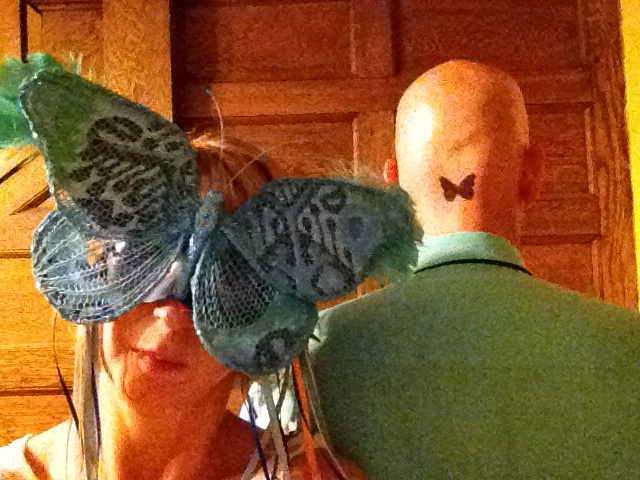
We’re all a little weird. And life is weird. And when we find someone whose weirdness is compatible with ours, we join up with them and fall into mutually satisfying weirdness— and call it love—true love. ♥

-Robert Fulgham

Wishing you a world full of weird and a week filled with happiness!

Image

The Other Love of My Life

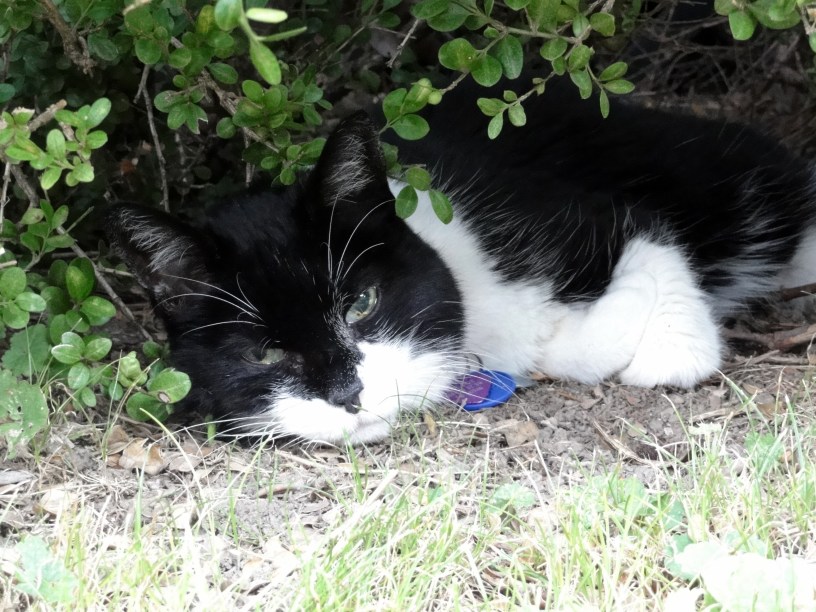
Two years ago, on Good Friday 2013, I lost my sweet Roscoe kitty. Roscoe, a tuxedo tomcat, was fifteen when he died: fourteen years after I brought him home from the shelter, thirteen months beyond the vets’ predictions for his lifespan, and one month and five days after I met my now-fiancé Steve.

The timing, I’ve long felt, was no accident.

Meeting Cute

Roscoe had been my buddy since January 1998, when he adopted me at Cat Welfare, a no-kill cat shelter in Columbus, Ohio. I’d lost my cat Tiko to mouth cancer in December, and though I was buoyed through the holidays by travel and the presence of family, when I returned to the Midwest winter and an empty apartment, the loneliness was all-encompassing. I’d thought I might wait a while longer to find a new feline, but I was bereft.

Tiko had been solid black, and I knew it would be too hard to have another black cat; he’d been older when I took him in, too, and losing him after only six years broke my heart. So the plan was to find a kitten, black-and-white. When I arrived at Cat Welfare, they didn’t have any kittens. Some cats there roamed freely, having earned their floor privileges, while the newer additions resided in cages. I visited with most every black-and-white cat I saw, but I really wanted a kitten. As I readied to leave, thinking I’d try the Humane Society, the woman at the front desk asked if I’d seen the tuxedo cat in the second room. I hadn’t—he was sound asleep, curled up in the back of his cage. Oh, he’s a sweetheart, she said, and only about a year or year-and-half old. He’d been caught in one of their traps—sometimes, when the shelter was full, people dropped animals off outside anyway, hoping the shelter would find and take them in. This tuxedo kitty had been so lucky.

She pulled the sleepy cat from his cage and put him in my arms. Almost immediately, he rolled back into the crook of my left elbow so that I held him like a baby. He wore a slightly askew black mask and had a soft white belly, his clear green eyes framed by white whiskers. The pads of his paws were multi-toned, some gray, some pink. He began purring and gave me a long, slow blink, then reached his chin up and rubbed my chin with his.

Oh, boy. Continue reading

Not-So-True-Love Tuesday: Poly- wants a what?

Every so often, I delve back into my dating past to share a story of those “BS” (Before Steve) days.  It’s always an exercise in extreme gratitude.


“Jeremy,” the firBroken heartst man I met on Match.com, lived in a small town in North Carolina. Largely because of the distance, we traded online messages for a couple of weeks before getting together. Jeremy’s emails were smart, witty, and flirtatious. One day he sent me a lyrical note describing the silver crescent moon flanked by Mars and Venus he’d seen in the early morning sky, a hopeful sign that made him think of us.

When we finally met, he hugged me and told me I was even cuter in person than in my pictures. But things felt out of sync. In person, both of us were quieter, more reserved than our online personas. Dinner was okay. On the road to visit my parents in Georgia, I stayed at Jeremy’s apartment that night, while he slept at his buddy’s house down the road.

When he arrived the next morning to go to breakfast, he caught me absent-mindedly perusing a bookshelf. With more animation than I’d seen from him up to that point, he asked, “Did you see anything that scared or unnerved you? Because if you did, you can ask me questions.”

I hadn’t, but I hadn’t been looking that closely. I shook my head no, and gave the shelf one last glance as we headed out the door. No “DIY Guide to Murder” or “Bombbuilder’s Manual” I could see. Did I want to know? Continue reading

Image

Carry On

My fiancé Steve sent a sweet email on March 23rd, telling me about his correspondence with an old friend who was looking forward to our wedding, then noting he’d had a realization: March 23rd marked what would have been his and his late wife Karen’s thirtieth anniversary.

Coincidentally, I’d recently read a novella in poetic form by Lesley Wheeler, The Receptionist. In the chapter “A Ghost at the Thanksgiving Feast,”  the receptionist’s stepmother flames out at a mention of her husband’s first wife during Thanksgiving dinner. Later she apologizes for her unseemly outburst.

It’s never occurred to me to be upset by the fact of Steve’s life before me. I’ve always seen his first marriage as evidence of his ability to commit to and care deeply for someone, a sign he possesses the strength and flexibility a long, happy marriage requires. He learned how to love a partner, and let himself be loved by a partner, from and with Karen. She and he raised two wonderful sons who are now part of my life. There are no threats here, only gifts.

Everyone has a history. If anything, not accumulating a rich store of experiences by the time you’re over forty makes you more weird than normal. Yet often we’re quick to label the bulk of our romantic past with the pejorative term “baggage” and attach all kinds of angst to it. Why? The end or loss of any relationship brings great grief, but before that, even in that, there remains love and joy. Continue reading