Image

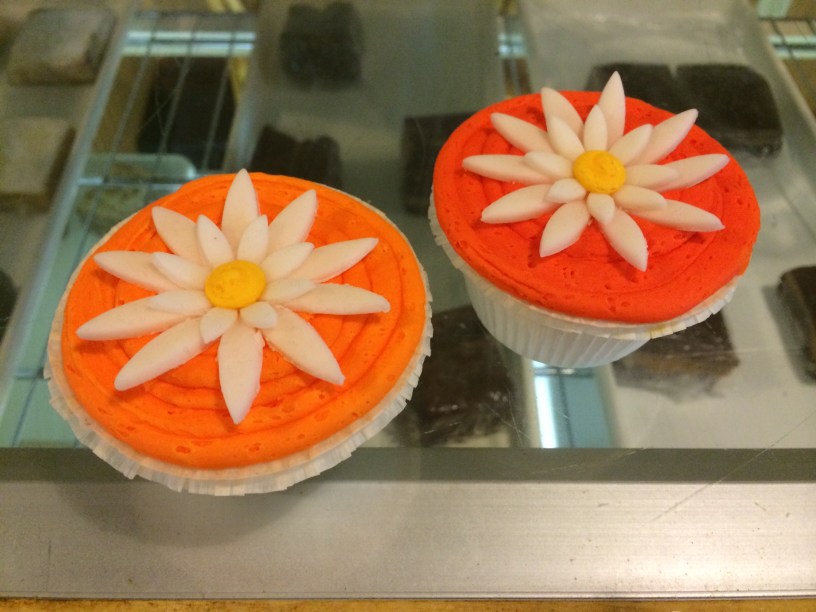
Breaking Cake Together

Once we had a venue selected and booked, it was time to turn toward securing other vendors. The choice of where to focus next was obvious: the cake.

It’s all about priorities, people.

The tradition of wedding cakes, according to a fascinating history by Carol Wilson in Gastronomica, dates back to antiquity: “Ancient Roman wedding ceremonies were finalized by breaking a cake of wheat or barley…over the bride’s head as a symbol of good fortune,” after which the bride and groom would share a few of the crumbs. I’m certain many brides were grateful when this custom (also the precursor to modern-day confetti, says Wilson) morphed into a somewhat gentler crumbling of the cake over the head. Still, both rituals are a little too similar to the disturbing contemporary trend of the bride and groom shoving wedding cake in each others’ faces. Because nothing says I love you like frosting ground up your nose.

I’m equally glad we’ve moved beyond Yorkshire’s “Bride pie” (1500s-1800s), which Wilson describes as consisting of “a large round pie containing a plump hen full of eggs, surrounded by minced meats, fruits, and nuts” and decorated with “ornate pastry emblems.” It sounds like a cross between a Turducken and a fruitcake, and the fertility symbolism is a little less than subtle. According to Wilson’s history, it wasn’t until the late 1700s that a sweet cake finished with white icing became a common part of English wedding celebrations. Continue reading

On Gratitude and Gay Marriage

I’m a middle-aged fashion model. According to conventional industry standards, I’m neither tall enough, thin enough, nor young enough to qualify as model material, but that’s one of the main reasons I took on the challenge: I wanted, in my own small way, to expand our narrowly defined ideas of what constitutes “beauty.”

I’m no pro, nor do I aspire to be, but I model fairly regularly with a volunteer organization that promotes diversity in fashion and the fashion industry. Back in June, we did a runway show at a local gay bar and dance club to support the launch of a new LGBTQ magazine. As we dressed backstage before the show, one of the other models, “Kesha,” a stunning African-American woman maybe ten or twelve years younger than me, commented on her wedding planning progress. When I told her I’d recently gotten engaged, too, she said, “Congratulations, girl!” gave me a big hug, and noted, “We need to talk.”

After the fashion show, Kesha and I sat in the club’s bar, drinking wine and sharing nuptial details. Her wedding is slated for this coming spring, so she’d already booked her venue, the Patrick Henry ballroom, and chosen bridesmaids’ dresses, floor-length Tiffany-blue gowns. We talked colors, sharing pics back and forth on our phones: her centerpieces, my vases. She’s planning on two dresses: for the ceremony, a fitted mermaid gown with beading and bling; and for the reception, a mini-dress with a frothy full-length tulle overskirt. As we clicked through pictures, one of us spotted a cat on the other’s phone, so we took a detour into trading pet photos. I’d modeled with Kesha for over a year, but this was the first real conversation we’d had. Weddings, it seems, have a way of bringing people together.

Continue reading

Gallery

Perfectly Imperfect: Beauty, Brokenness and DIY Decor/Before

“Imperfection is beauty, madness is genius, and it’s better to be absolutely ridiculous than absolutely boring.” -Marilyn Monroe

Perhaps one reason I resist aspiring to perfection is my long-time love of vintage and antique goods. Perfection is a shiny veneer, pretty enough to look at, but usually a temporary state—and, frankly, a little boring. Wear and tear tells a story: a little rust lends a venerable charm, a few dings show an object was used and valued, a crooked hand-sewn seam or repair imbues an inanimate linen with tangible humanity. The Online Etymology Dictionary describes the root of “imperfect” as deriving from the “mid-14c., imperfite, from Old French imparfait, from Latin imperfectus ‘unfinished, incomplete’.” All of the imperfect objects in the gallery, above, were found at thrift, consignment, or antique stores, and all will become part of our wedding decor. When I look at them, I see the beauty in their imperfections, and the possibilities in that beauty. They are indeed “unfinished and incomplete,” though my goal is not to “perfect” them, only to highlight their inherent loveliness and enhance it by finding fresh uses for familiar things.

“To banish imperfection is to destroy expression, to check exertion, to paralyze vitality.” – John Ruskin

Continue reading

The Problem of the “Perfect”

When I went in for a dental check-up and cleaning not long ago, my hygienist, “Christina,” told me her daughter had gotten married last spring, right around the time Steve and I had gotten engaged. Since she’d recently planned and carried out a wedding locally, I thought she might be a good resource for vendors, and she was eager to offer advice. In between bite-wing x-rays, I asked about planners and photographers, and she shared a couple of names. By the time she started telling me about her daughter’s venue and describing the day, I was tilted back in the chair, various instruments scraping and splooshing and polishing my teeth, a captive audience unable to speak.

Which was okay, because Christina had plenty to say.

She told me about her daughter’s wedding dress. When they found “the one,” it was a tiny bit over their budget, but she decided it was worth the couple hundred dollar splurge. Then they’d driven to Richmond and spent four times the amount of that splurge on alterations to ensure the dress was “perfect.” “The dress matters so much,” Christina said, as she handed me the suction. A bridal portrait of her daughter sat on a nearby shelf, and the dress was flattering. Still, interviewing multiple cleaners all over town, and stressing out the poor woman they’d selected so much she swore she hadn’t slept the night before she was to press it? It seemed a little extreme.

Then, Christina told me about her daughter’s wedding party, the bridesmaids’ dresses they’d chosen. “I was worried about one of my daughter’s attendants,” she said, lowering her voice confidentially. “You know, worried about her figure.”

I was glad my mouth was already open. What on earth?

“And she’s sort of this shy, quiet type, too, a librarian, so I was worried about whether she’d even have a good time,” she continued.

I blinked rapidly in defense of introverts everywhere.

“But—” Christina turned away to check the x-rays of my mouth splayed across the computer screen behind her. “Her dress looked lovely, and she was fine.” She descended on my mouth again. “In fact, she came up to me at the end of the wedding and said ‘This wedding has ruined all other weddings for me in the future—it was perfect.’ And that—” she paused and pointed the polisher at me “—is what your mother wants to hear.”

I’m thinking: after 45 years, my mother just wants to hear me say I do.

“It wasn’t perfect,” Christina added, a bit wistfully. “But, it was fun.”

Fun is good. Fun is great. It’s not a Broadway production competing for a Tony; it’s a wedding celebration. We say our vows, we have a party, everyone eats, drinks, dances until the shoes come off and the conga line rolls. Legal, fun, and done: those are my criteria.

Don’t get me wrong—I want the flowers to be exquisite, the wedding party to be radiant, my dress to float just-so as I descend the stairs against the backdrop of robin’s-egg-blue sky. I’d be lying if I said I hadn’t pictured this or that moment, in this or that ideal way. But aspiring for everything to be “perfect”—a word Christina kept repeating, a standard she seemed to think attainable—is, in my experience, mostly a recipe for trouble.

Christina told me she’d dreamed for months about her daughter’s wedding day. She’d cried imagining that morning, how special sharing the preparations and getting ready together would be. “And then,” she said, “we just ended up fighting.” The plan was for her daughter to text her when she woke up, and mom would go in to snuggle her before they launched into the big day. “Well,” she said, shaking her head at the memory, “by the time she texted, I was already up and doing wedding stuff that had to be done. And somehow I missed the text.”

And that’s the problem of the perfect: too many, too high, too exacting expectations. Not to mention misplaced priorities in pursuit of it. What “wedding stuff” was more important than that snuggle? Then again, attempting to script that kind of “perfect” moment is usually unwise, because no matter what happens, it rarely matches the fantasy.

There is no such thing as “perfect,” not really. There are expectations, and people or events that meet those expectations—or don’t. We have a habit of calling whatever does meet (or exceed) our expectations “perfect”; what doesn’t is a disappointment. But “perfect” is an abstraction, a relative concept, a practical impossibility. “Perfect” is perception, not reality, and acting as if it is a clearly defined, achievable entity is more likely to lead to discontent than delight.

“I learned my lesson,” Christina reassured me—or maybe herself. Later that morning, when she and her daughter were at the salon together getting hair and makeup done, the wedding planner called with an issue. Christina took a deep breath and decided to let go of trying to make the day “perfect.” She referred the call to her husband and went back to enjoying the moment with her daughter.

I’m not sure my hygienist has fully overcome her perfectionist tendencies, but as a recovering perfectionist myself, I know it’s a tough addiction to crack. So whenever I start to worry about some little detail (What if we can’t get the right color daisies?) or some piece I can’t control (What if it’s pouring rain that day?), I remind myself that oftentimes the most memorable moments come from the minor mishaps and unexpected events, the things you couldn’t possibly have planned for but will never forget. I think back to how all the guests at my brother’s wedding were preparing to hum an impromptu wedding march in case the bagpiper, who was delayed, couldn’t make it in time. Or the moment when we realized we didn’t have rose petals readied for the flower girl, and my mother sat down with a basket in her lap and began to pluck petals. My brother knelt down in front of her, took a rose, and went to work.

As we were scheduling my future check-ups, Christina asked about my wedding date.

“September,” I said, happy to be sitting upright once again, my mouth appliance free.

She clicked through her online calendar. “Oh, good,” she said. “That’ll be shortly after a cleaning, so your teeth will look great for pictures.” She turned to me and smiled. “Perfect.”
Image

Wedding Planning 101: Lessons from Kim and Kanye

I don’t usually follow celebrity gossip, but whenever I visit my hairstylist or the doctor’s office, I enjoy flipping through a cheesy magazine or two. After all, it would be un-American of me not to maintain at least a basic knowledge of the intimate details of vast numbers of people I’ll never meet and rarely respect. While getting my hair done not long ago, I was perusing my stylist’s back-stash of celebrity rags and saw a magazine headline from fall 2013, something along the lines of “Kim leaves wedding planning to Kanye.” Along with most of the rest of the internet, I’ve seen a bit more of Kim Kardashian lately than I ever really needed or wanted to, though truth be told, I only know who she or any of the Kardashians is because their antics get so much press coverage (if coverage is the right word…). Sans cable or satellite, I don’t get E! and have never seen the family’s reality show. In fact, I’m proud to report I had to look up which network even carries it; as further proof of our compatibility, Steve didn’t know either!

The part of the headline that caught my eye was not “Kim” nor “Kanye” (the musician who railed at Taylor Swift for winning a Grammy he thought someone else deserved, yes?). The words I latched onto were, no surprise, “wedding planning.” Steve and I are, relatively speaking, still in the early stages of corralling the vast compendium of activities that innocent-sounding phrase describes, but I continue to feel amazed and overwhelmed at the seemingly infinite reach of this thing called the “wedding industry.”

So, when I read the headline, I had three thoughts, in this order: (1) Wow, there are times when I wish I could hand it all off to Steve. (2) I could never hand it all off to Steve—I’ve waited years to plan my wedding! And finally, (3): Bullshit. Kanye’s idea of wedding planning probably means making a list of extravagant ideas, picking up a phone to hire a wedding planner, and then telling his staff to get busy. Methinks–as I have texted back and forth with my mom about fabric choices, spent hours perusing photographers’ websites, and sent yet another email to our chosen venue, asking, again, when can we, please, sign a contract?—Mr. West’s dreaming up ever more grandiose ideas with nary a worry of how to finance any of them does not count as “planning.”

Continue reading

Image

A Mother’s Dream, in honor of the wedding that wasn’t

As a child and young woman, I attended a Presbyterian church in Georgia where my parents are still members. The current church was built in 1976, when I was six, and I recall the blend of curiosity and awe I felt upon seeing it for the first time: its massive stone walls, soaring wooden beams, the rich red upholstery in the sanctuary. The stained glass windows, an artist’s and writer’s dream, appeared at first glance to be abstract collages of color, but a closer look revealed images, stories, a narrative that traveled from pane to pane. And I was fascinated with the bride’s room, a small, quiet space adjacent to the ladies room off the narthex. Its lime green, high-pile carpet and counter-long mirror framed by marquee-style bulbs made it glamorous and exotic, and I liked to sit on the swirly brass vanity chair and imagine.

One of the most beautiful features of the new church (now 38 years old) was a central courtyard. It is best viewed from the narthex, adjacent to the sanctuary, as the wall between the narthex and the courtyard is made mostly of glass. My mother Margaret has always loved the courtyard, and for as long as I can remember, she has voiced her dream that I would get married there someday. We would stand in the narthex, side by side, imagining the scene together. Guests would enter from the narthex and take seats in white chairs lined up in the central grassy area, shaded by several trees. The groom and minister would enter from the door off the church library, to the left. The bride would enter from the choir room door on the far right, behind the guests, then walk the along the curved, pebbled walkway in front of them to meet her groom. Flowers would bloom all around, the sun light the ceremony. It would be intimate and beautiful.

For years that was the plan, that I would get married in the courtyard. We talked about it enough that I can still picture the walk clearly in my mind. But the years passed, and I remained single. I moved away, first to Ohio, later to Virginia, and I still remained single. The church was expanded and renovated, a fountain placed in the courtyard, and it began to look like I’d always be single. And the years flowed on: I was no longer a member of the church, the minister I’d grown up with retired. When my mother and I had stood at the window dreaming, it had never occurred to either of us that a wedding wasn’t a sure thing. Continue reading