FsFTB Has a New Gig!

I’m thrilled to announce Forty-Something First-Time Bride is now a Real Bride Blogger for bridebook magazine!

Bridebook is a great resource for Virginia brides, and they highlight real weddings in every issue. I’m excited to share more stories about marrying at mid-life with their readers.

I’ll be writing for bridebook once a month, in addition to my regular posts here. My first piece went up on their site yesterday–click on the title below to check it out!

It’s hard to believe that our wedding is just four months away. Read on for a tale of some serious (and not-so-serious) mother-daughter bonding.

MomandMeMothers, Daughters, and Wedding Dresses:

A Middle-Aged Bride Shops for “the One.”

 ♥ ♥ ♥

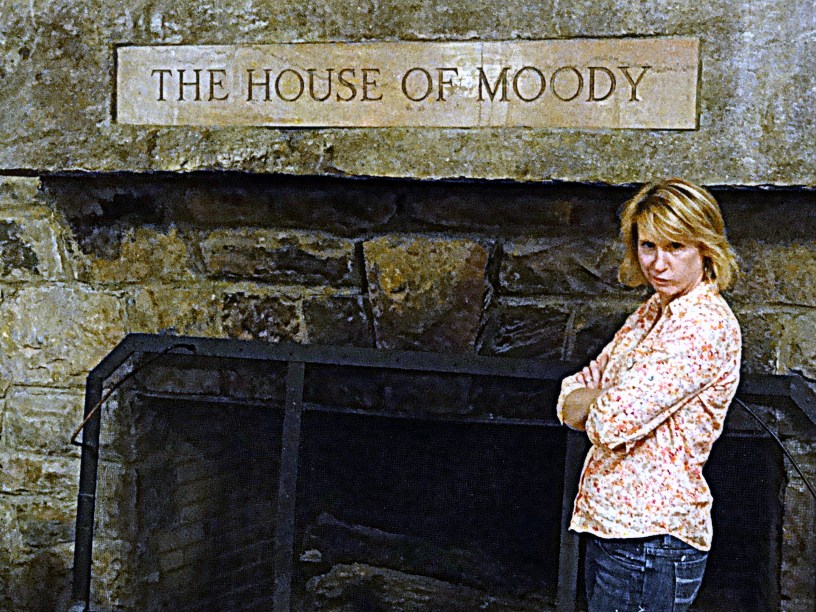
If you missed my first dress adventure, check out Funny Story About My Dress… here on Forty-Something First-time Bride. And for a bit more backstory on my mom–that lovely lady in the photo above–try A Mother’s Dream in honor of the wedding that wasn’t.

Weddings for Equality: Vendor Showcase

I recently had the opportunity to model for the first Weddings for Equality Wedding Vendor Showcase, held at the new Hilton Garden Inn at South Peak in Roanoke. The event was organized by Sarah Pendleton of Pumpernickle Pickle Catering, and it was a great success, with over 25 vendors from Roanoke and the New River Valley, and over 30 pre-registered participants plus additional walk-in visitors.

My relationship to the event was a bit different as a model than as a bride shopping for vendors (we pretty much have that all sewn up, YAY!). Still, I was able to wander for a few minutes between being styled by the hair and makeup artists of Thomas Dunn Studios and getting dressed for the fashion show. I was excited to see several of our selected vendors there, including Mark Frye of Creative Occasions, whose flowers were exquisite as always; our wedding photographer Noah Magnifico, who captured a few great iPhone snapshots; and our planner Michelle Robb of The Wedding Planner magazine and The Perfect Fairytale. There were also informative displays by the Roanoke Diversity Center, Hollins University, Fashionista Roanoke, and numerous other wedding vendors, including bridebook, Les Cheveux Salon, Green Hill House, and more.

Continue reading

Image

Our First Fight

“April is the cruellest month,” wrote T.S. Eliot, whose words have been echoing in my head of late, with the recent passage of Indiana’s “Religious Freedom Restoration Act” and the ensuing debate about whether wedding professionals should have the right to claim a religious exemption when it comes to baking cakes or selling dresses to same-sex couples. The brouhaha engendered by RFRA alongside end-of-semester stresses have put me in mind of mine and Steve’s first fight.

♥ ♥ ♥

We don’t fight much, and “fight” is relative—our fights are probably more accurately described as “intense disagreements” or maybe, once or twice, “arguments.” We rarely argue about elements of our relationship, but sometimes we disagree about ideas or politics or some happening in the world. The first time it happened was back in July 2014, when the Supreme Court issued the Hobby Lobby decision.

I still remember sitting on my sofa, talking to Steve on the phone, expressing my frustration with the decision. I’d posted a question on Facebook: “Hobby Lobby purports to believe it is wrong for the government to ‘impose’ their ‘moral standards’ on the company at cost to the company. How then do they justify imposing their moral standards on their employees, at additional cost to the employees? (Who, by the way, are likely LESS financially able to bear the burden.) So it’s okay to impose a set of beliefs and morés on others, so long as they’re YOUR beliefs and morés?”

I was dismayed when Steve, though he didn’t exactly side with the Supreme Court’s decision, expressed empathy with their reasoning. He was (not unjustifiably, in a general sense) concerned about the over-reach of government. While he favored some regulation, he felt, on principle, there was inherent danger in the government dictating the policies of a privately held company, especially if they had moral objections to the mandate. If an employee didn’t like the specifics of a company’s insurance plan, he argued, she or he didn’t have to keep working there. Continue reading

Image

Wedding Crawl 2015

When Steve told one of our friends we were spending Sunday afternoon at a Wedding Crawl, she replied that it sounded like what you did to get to the ceremony after you had a little too much fun at the rehearsal dinner the night before. There was plenty of fun at this year’s Crawl, and the temptations were many (red velvet cake pops!), but the biggest danger of overindulgence was in great wedding ideas.

This was the third year for the now annual Wedding Crawl, a festive event put on by teams of local wedding professionals in the Roanoke Wedding Network. Each team collaborates to create a mock wedding and reception at one of five prime downtown wedding locations. The venues featured were the Corinthian Ballroom, the Patrick Henry Hotel, Charter Hall in the Market Building, the Taubman Museum of Art, and (our personal favorite) the Center in the Square Rooftop. Each “wedding” showcased a ceremony and reception set-up complete with decorations, flowers, a planner, a caterer, a photographer, a photo booth, a DJ, a bakery and cake, and a bride, along with other vendors such as officiants, hair and makeup salons, lighting designers, and videographers. I was really impressed at the commitment and creativity of all of the teams, who clearly put in a lot of time and energy to make the event a success.

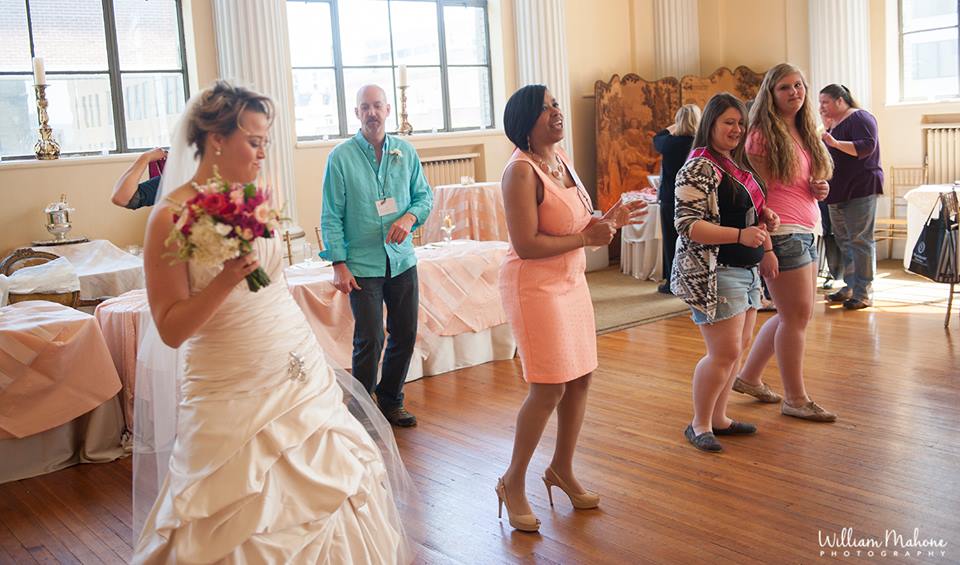
Photo credit William Mahone Photography

Photo, William Mahone Photography

After signing in at the Roanoke City Market, where I was given a “bride-to-be” sash and pinned a “fiancé” boutonniere on Steve, we were directed to start at the Corinthian Ballroom, an elegant space with great natural light. It was there we sampled the aforementioned cake pops, courtesy of Delish! Sweets and Treats, and goofed around in SwellBooth‘s vintage-look photo booth. Upstairs we indulged in Chanticleer Catering‘s yummy victuals, and I convinced Steve to do the Wobble, which William Mahone Photography captured on camera. (I’m behind the bride.)

Have I ever mentioned just what an incredibly good sport Steve is? Continue reading

Image

Why the best wedding day won’t be the best day of your life

Whenever bridal magazines or wedding dress ads proclaim my wedding day will be the most wonderful day of my life, I hope they’re lying.

Think about it. You find the love of your life, decide to get hitched, throw a big party to celebrate the beginning of your marital bliss, and—what? It’s all supposed to be downhill from there?

Lies, damned lies…and some statistics

Putting all the emphasis on the big day may well start a marriage off at a disadvantage. According to a study conducted by economists Andrew Francis and Hugh Mialon of Emory University, there is a negative correlation between lavish, high-cost weddings and how long a marriage lasts. “’A Diamond is Forever’ and Other Fairy Tales: The Relationship Between Wedding Expenses and Marriage Duration” made a big media splash in fall 2014.The authors surveyed over 3000 adults, all of whom had been or were still married. They discovered that “relatively high” spending on an engagement ring increased the odds of the marriage ending early by 1.3, and those adults who reported spending more than $20000 on their wedding were 3.5 times more likely to get divorced than those who spent between $5000 and $10000.

Overall, those who spent less on the wedding tended to stay married longer. The researchers speculated that marital stress caused by debt was a contributing factor. Couples do fight about money, but in many cases, parents pay the wedding bills. Still, the considerable gap between the world of extravagant weddings and everyday life creates unrealistic expectations, and too often, the nuptials command more devotion than the actual relationship.

The problem is that we still believe in fairy tales. We plan a wedding but act as if a marriage just happens.

“Downhill” is relative

A wedding is not representative of married life. Yes, it’s a wildly exciting day, filled with the love and affection of visiting family, hours of talking and dancing with friends, beautiful flowers, fancy cake. It’s a day full of meaning and ritual, public declarations of deep feelings (and, not incidentally, a significant outlay of cash). Every moment matters, every detail is documented.

So there is an inevitable post-wedding lull, maybe even a bit of a letdown.

Thank god.

Supposing I could survive an entire married life so physically, emotionally, and financially intense, if nuptials actually modeled marriage, I would still implode under the pressure of wearing white every day.

Planning a wedding together, on the other hand, is excellent practice for marriage, and, I suspect, much more representative of daily married life. Planning together requires teamwork, communication, negotiation. My fiancé Steve and I have volleyed ideas back and forth, discussed preferences, revealed our individual likes and dislikes. We’re learning, together, how to balance desire against budget, what to prioritize, where to save and when to splurge. We’re making mutual decisions and sharing burdens, discovering more about ourselves and our partnership. We’re growing our love for one another as we look forward to the future, together.

Maybe that sounds less than romantic, but love that lasts is built and sustained through the daily choice to stay present and engaged. Love is something you do as much as feel. According to Carrie Ichikawa Jenkins, a philosopher who studies romantic love at the University of British Columbia, instead of buying into pre-determined ideas about romantic love as a “package deal” complete with “hearts and flowers” and “eternity,” we need to ask “what is love?” and define and shape it for ourselves. We need to do the same for marriage. Crafting a marriage that lasts requires deliberation and conscious reflection; it takes, as Arthur C. Brooks urged in a recent NY Times column, courage and mindfulness. A loving, committed marriage doesn’t just happen; even more so than a wedding, it demands thought, time, investment.

Parents of brides (and grooms) to be, take note. Traditionally, when parents foot the bill for the wedding, they maintain control of the budget and command a greater say in the decision-making. You might have paid for your child’s college, too, but did you dictate every class taken, every club joined, the chosen major, minor, and concentration? (If you did, you might consider paying for your kid’s therapy before taking on a wedding—just sayin’.) Giving your child a fairy tale wedding and worrying over every last detail of it yourself deprives your child and his or her partner the opportunity to learn to work as a team, the chance to begin learning how to budget, prioritize, negotiate. It robs them of the opportunity to reflect on what they value as a couple, to learn more about what makes their future spouse tick (or tic). Given the stats, less fairy tale and more participation from the bride and groom might be a better option.

Besides, having the support of family and friends matters more than their readiness to pay for an extravagant event; Francis and Mialon’s study showed positive correlations between marriage duration and higher numbers of people attending the wedding. Couples who went on a honeymoon were also more likely to create a lasting marriage, perhaps buoyed by their willingness to invest dedicated time in new experiences and one another.

Don’t forget the map

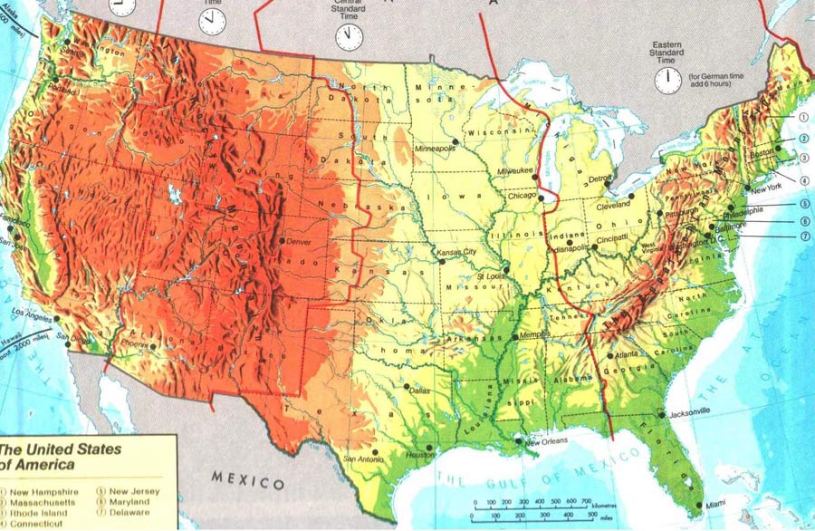
The wedding is the exotic island getaway: a weekend of high upon high, a romantic and sensual blitz. Marriage is a cross-country road-trip. There will be days of high adventure and exquisite beauty, days that rise above others in their pleasure and joy: watching a child walk confidently across the swinging bridge he once feared, standing sweaty and spent with your spouse atop a mountain you’d long dreamed of climbing together, dancing in the light of a fading sunset on the beach where you first fell in love. There will be days, should the fates allow, even more wonderful and wondrous than the day you walked down the aisle.

But there will be steep descents, too, and wide, flat plains of calm. With any luck, you’ll mostly travel through rolling hills and gently scenic vistas, the occasional dramatic peak rising up and surprising you, the stunning, startling beauty of a tree pushing through rock. Some days you’ll pass through valleys drizzled in rain or buried in snow; others you’ll walk the windswept dunes of sun-warmed beaches, the ocean lapping at your feet. There will be exhilaration, exhaustion, exertion, and rest.

Always, the horizon will stretch before you to a future beyond imagination. May the map of your love be your guide.
Image

How to Speak Flower

The language of flowers, known as floriography, has been spoken for centuries: Shakespeare made use of it in numerous of his plays, as did Jane Austen in her novels. The practice of sending “secret” messages through flowers became extremely fashionable in Victorian times, when it was considered gauche and inappropriate to speak openly about one’s affections. It’s hard to imagine that the messages contained in these “tussie-mussies” (small bouquets wrapped in lace and tied with ribbon) remained secret, given the wide popularity of flower dictionaries that helped senders and receivers compose and translate. Many of the meanings we associate with particular flowers today descend from these Victorian-era dictionaries, some of which, like Kate Greenaway’s 1884 The Language of Flowers, remain in print.

Not all guides offer the same translations, though there’s some agreement. Roses have long been associated with love, but other flowers also indicate romantic affection. Tulips express love, although the giver needs to choose the color carefully: red tulips say perfect love and commitment, while yellow tulips have traditionally signaled hopeless love. For the true romantic, Greenaway’s flower dictionary notes that variegated tulips tell the recipient she (or he) is possessed of “beautiful eyes.” Daffodils convey regard or, even more pleasantly, “the sun shines when I am with you.” Ivy is associated with fidelity and marriage, while peonies suggest early love and bashfulness. Orchids indicate rare beauty. And for all the sapiosexuals out there, pansies are for “thoughts” and clematis indicates “mental beauty.”

February is the month for flower-speak, which piqued my curiosity: what stories might some of the flowers we’ve selected for the wedding tell? Continue reading